Swollen feet and ankles can make ordinary socks feel tight and uncomfortable. Elasticated cuffs may dig into the skin and leave deep marks, particularly towards the end of the day. Choosing the right socks can make a noticeable difference to everyday comfort. In this guide, we look at what to consider when choosing socks for swollen feet.
Why do swollen feet make socks uncomfortable?
When the feet or ankles swell, they become larger than they were earlier in the day. A conventional elasticated sock cuff may then become increasingly tight and press into the skin. This can leave noticeable marks around the ankles and may become uncomfortable, particularly for people who spend long periods sitting or standing.
Swelling can have many causes, including hot weather, prolonged standing or sitting, certain medications and some medical conditions. If swelling is persistent, unexplained, painful, affects only one leg, or is accompanied by other symptoms, it is important to seek medical advice rather than simply changing your socks.
What should you look for in socks for swollen feet?
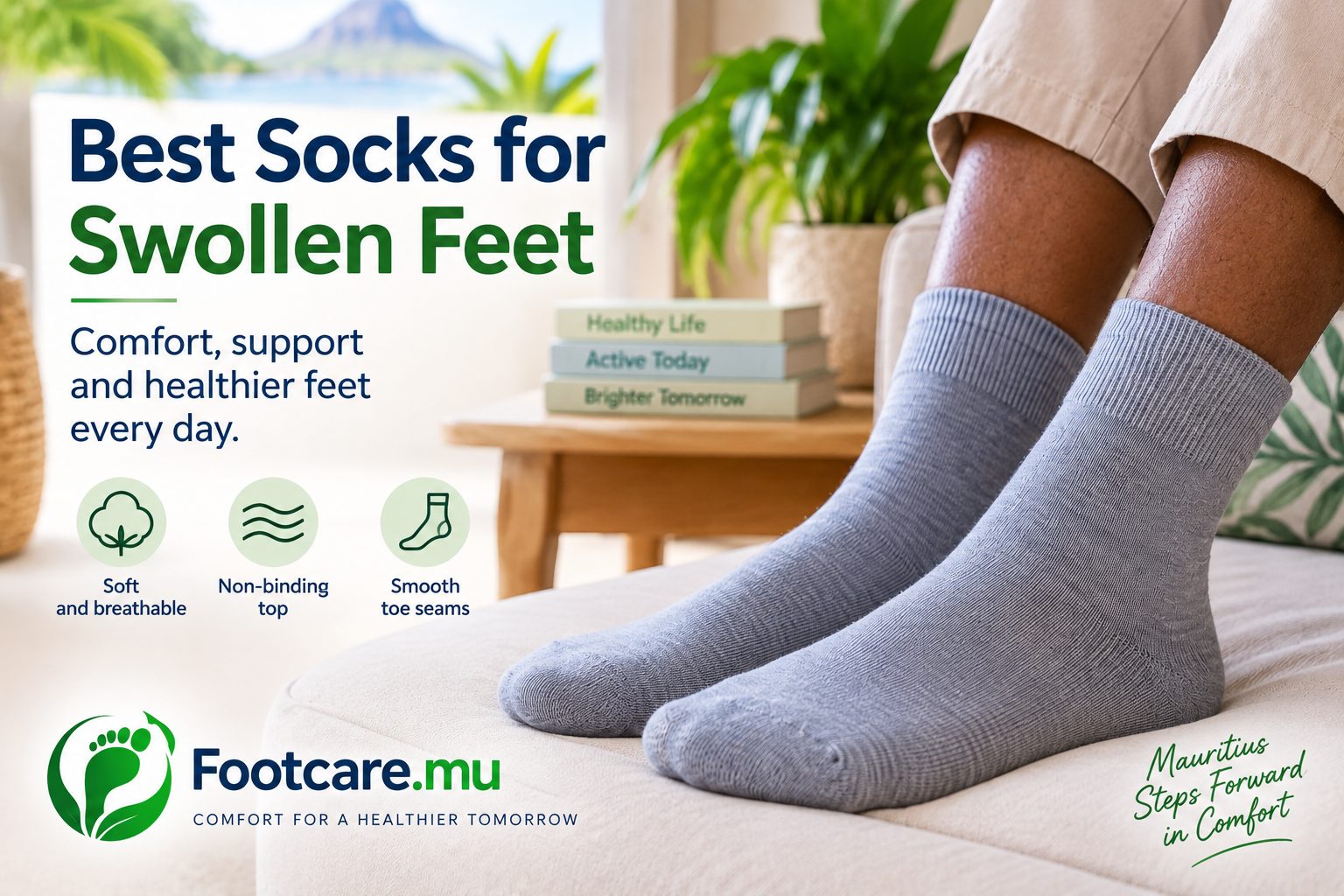
The most important feature is a soft, non-binding top. Unlike a conventional tight elastic cuff, a non-binding top is designed to stretch more gently around the leg and accommodate changes in the size of the ankle during the day.
A soft, non-binding cuff
Look for socks that stay comfortably in place without gripping the leg too tightly.
Smooth toe seams
Bulky or raised seams can rub against sensitive toes. A smooth or seamless toe can help reduce friction and improve comfort.
Breathable materials
In a warm and humid climate such as Mauritius, breathable socks with a high natural-fibre content can help keep the feet more comfortable.
A comfortable fit
Socks should not feel restrictive around the foot, ankle or lower leg. The correct size is just as important as the design of the sock.
A soft, non-binding cuff
Look for socks that stay comfortably in place without gripping the leg too tightly.
Smooth toe seams
Bulky or raised seams can rub against sensitive toes. A smooth or seamless toe can help reduce friction and improve comfort.
Breathable materials
In a warm and humid climate such as Mauritius, breathable socks with a high natural-fibre content can help keep the feet more comfortable.
A comfortable fit
Socks should not feel restrictive around the foot, ankle or lower leg. The correct size is just as important as the design of the sock.
Are diabetic socks suitable for swollen feet?
Diabetic socks are often designed with features that can also be helpful for people with swollen or sensitive feet, such as soft non-binding tops, smooth toe seams and comfortable materials. You do not necessarily need to have diabetes to benefit from these features.
However, socks do not treat the underlying cause of swelling. If your feet or ankles are regularly swollen, particularly if the swelling is new or worsening, it is important to discuss it with a healthcare professional.
Choosing socks for swollen feet in Mauritius
Mauritius has a warm and humid climate, so comfort and breathability are particularly important when choosing everyday socks. A high cotton content can provide a soft and comfortable feel, while a non-binding top can help avoid unnecessary pressure around swollen or sensitive ankles.
When choosing socks, look beyond the colour and style. Check the cuff, the toe seam, the material and the size. A well-designed sock should feel comfortable throughout the day without leaving the leg feeling tightly constricted.
Find comfortable non-binding socks in Mauritius
At Footcare.mu, we offer soft, non-binding socks for men and women, designed with comfort in mind. Our range includes high-cotton socks with gentle tops and smooth toe seams, making them a comfortable choice for sensitive feet and ankles.
Our diabetic socks are available online through Footcare.mu, our facebook page, Chaussettes Diabétiques Maurice and can also be viewed and purchased at World of Nature, Plaza Boulevard, Rose Hill.
Free postage is available throughout Mauritius.